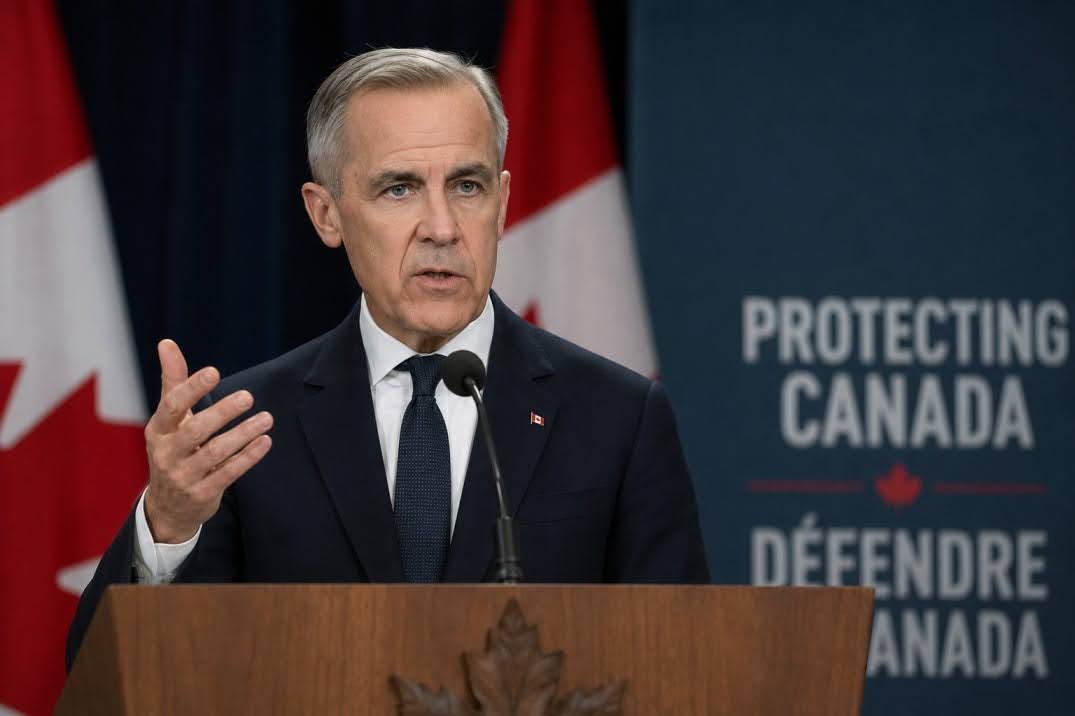
In a recent statement, Canadian Prime Minister Mark Carney has strongly criticized the Trump administration, urging U.S. officials to abandon derisive tactics and engage sincerely in trade discussions. This development comes just days before Canada plans to implement retaliatory tariffs on American products. Carney condemned the disparaging remarks aimed at Canada, labeling them as unworthy of the dignified offices involved. He emphasized that meaningful trade negotiations can only proceed once Washington ceases its focus on superficial exchanges and returns to substantive dialogue.
The discord has been escalating for some time, with tensions reaching a new high after President Trump signed an order to rename Lake Ontario as “Lake America,” a move that was met with widespread disapproval in Canada. Amidst this backdrop, the top U.S. trade negotiator has minimized the repercussions of the dispute, suggesting that the economic consequences would be more severe for Canada than for the United States and bluntly stating that no active trade discussions are taking place at the moment.
The disagreement follows the breakdown of U.S.-Canada trade negotiations that occurred roughly a week prior. In response, Washington imposed a 50% tariff on $20 billion worth of Canadian exports. Canada, being one of the United States’ largest trading partners, announced its own retaliatory measures, setting $20 billion worth of tariffs on U.S. goods to commence on September 8. This situation is anticipated to impact consumers on both sides of the border, affecting everyday goods significantly.
The U.S. negotiator attributed much of the blame to Canadian demands, highlighting issues such as the request for reduced taxes on heavy-duty trucks as a key factor that hindered progress. He questioned Canada’s sincerity in seeking a trade agreement, warning that if Canada restricted American goods and services, the U.S. would likely consider similar actions. In contrast, Canadian officials pointed to internal disagreements within the White House regarding who was spearheading the negotiations. Carney also noted that American negotiators viewed Canada’s French-language protections as contentious, though he underscored these as fundamental rights, especially in Quebec.
President Trump continues to position the trade dispute as a matter of Canada seeking the benefits of close ties with the U.S. without formal integration, accusing Canada of imposing substantial tariffs on American agricultural products over the years. The U.S. negotiator acknowledged the ambiguity surrounding the negotiation agenda, noting uncertainty over whether the breakdown was due to political or economic reasons. He maintained that the realistic options never included a choice between the existing tariffs and entirely duty-free trade.