The potential for heightened trade tensions looms large as U.S. President Donald Trump criticizes the European Union’s proposal to make Canada its first associate member. This move could lead to the imposition of substantial tariffs on European goods by Washington, a development that would significantly impact international trade dynamics.
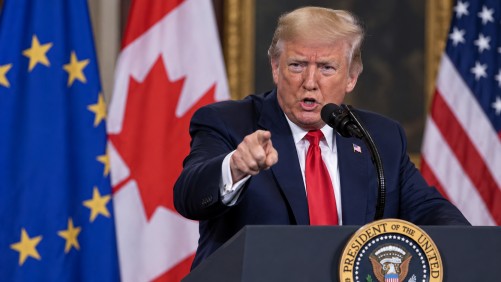
Trump has labeled the EU’s proposal as “laughable” and warned of “very serious tariffs” should the arrangement proceed. He perceives the EU-Canada partnership, which aims to deepen ties in technology, defense, and energy, as possibly hostile. The U.S. response will depend on the perceived intent behind the EU’s actions, according to Trump’s statements.
The EU’s invitation to Canada, extended by European Commission President Ursula von der Leyen, seeks to build an “alliance for the future” beyond existing trade agreements. The discussions focus on enhancing cooperation in areas such as defense industries, artificial intelligence, critical minerals, batteries, cybersecurity, energy, and Arctic cooperation. As democracies face mounting global challenges, von der Leyen emphasized the necessity of stronger alliances.
Historically, Canada and the EU have maintained a robust relationship, further solidified since Trump’s return to the White House and his tariff impositions on traditional trading partners. The EU-Canada Comprehensive Economic and Trade Agreement (CETA) already facilitates trade between the two entities, but the proposed associate membership suggests a more integrated partnership.
Canada is also exploring broader defense collaborations beyond the United States, exemplified by its application to join the Joint Expeditionary Force, a British-led military coalition. The EU’s associate membership concept is yet to be fully defined, as no formal category currently exists, though countries like Norway, Iceland, and Switzerland have close ties with the bloc.
As these developments unfold, the potential for changes in transatlantic trade and diplomatic relations remains significant, with implications for global markets and geopolitical alliances.