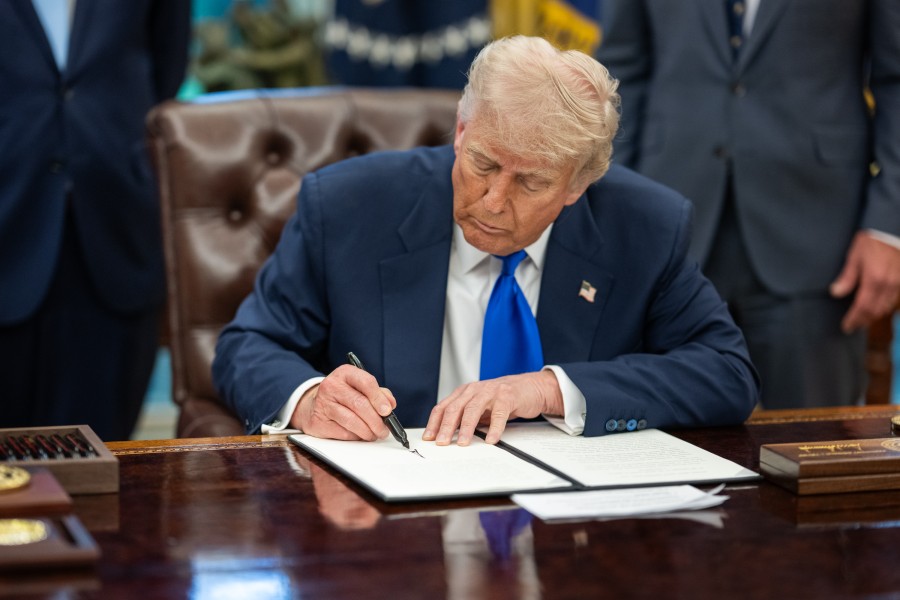
The United States is poised for a significant development in its nuclear energy sector as President Donald Trump prepares to unveil a substantial initiative. This plan includes $17.5 billion in low-interest federal loans aimed at facilitating the deployment of Westinghouse AP1000 nuclear reactors nationwide. The funding, administered by the US Department of Energy, is earmarked for acquiring essential equipment for up to ten AP1000 reactors across five dual-reactor projects. This initiative is part of a strategic effort to bolster domestic energy production and address the surging electricity demand spurred by AI data centers and growing industrial activities.
Seven utility companies have shown interest by signing letters of intent to join the program. The loans are targeted at early bulk procurement of specialized reactor components, a move expected to stabilize supply chains and lower project costs. By employing this financing method, the Trump administration anticipates reducing construction timelines by up to three years. Should the plan proceed without hitches, the new reactors are projected to commence commercial operations by approximately 2035.
This nuclear energy push forms a segment of a broader $80 billion expansion project involving Westinghouse Electric Company, Cameco, and Brookfield Asset Management. The consortium plans to initiate construction on about ten new reactors starting in 2026. To prevent cost overruns similar to those experienced during the Vogtle Nuclear Plant expansion in Georgia, where costs ballooned from $14 billion to over $30 billion, Westinghouse intends to utilize standardized reactor designs and fixed-price contracts.
The focus will be on the deployment of Westinghouse’s AP1000 pressurized water reactors and the AP300 small modular reactor design. The AP1000 technology is already operational at the Vogtle facility, which marked a milestone by bringing the first new US nuclear reactors online in decades during 2023 and 2024. This advancement underscores the administration’s perspective of nuclear power as a critical element of future energy security, given that nuclear sources currently account for roughly 20% of the nation’s electricity generation.
The anticipated expansion is aligned with goals to enhance reliable, carbon-free power generation, supporting economic growth and technological advancement. By investing in nuclear infrastructure, the initiative seeks to ensure energy security while fostering economic and industrial development across the country.