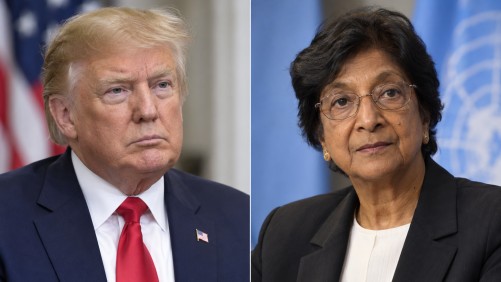
South African lawyer Navi Pillay has been awarded the 2026 Nobel Peace Prize for her extensive work in promoting human rights, international law, and peace. The Norwegian Nobel Committee announced the decision on October 9, underscoring the significance of international legal frameworks amid increasing global pressures on such institutions.
Pillay’s career has been marked by her staunch defense of human rights and her involvement in the anti-apartheid movement, as well as her investigations into crimes against humanity. This recognition comes at a time when the role of international law is being challenged by various political and social forces worldwide.
U.S. President Donald Trump, who had been vying for the prize, was bypassed in favor of Pillay. Trump argued that his administration played a role in resolving or preventing multiple international conflicts, including efforts related to the Israel-Hamas war and tensions between Iran and Israel. He also cited U.S.-led negotiations aimed at ending Russia’s war against Ukraine as part of his peace initiatives.
Despite these claims, several conflicts remain unresolved. The situation involving Iran continues to be tense, and there is little progress towards a lasting settlement regarding Russia’s ongoing invasion of Ukraine. Trump’s proposed recovery plan for Gaza has encountered significant obstacles, including disputes over Israeli troop withdrawals and the disarmament of Hamas.
Trump has previously expressed frustration over not receiving the Nobel Peace Prize, often criticizing the committee’s past decisions. Historically, four U.S. presidents—Theodore Roosevelt, Woodrow Wilson, Jimmy Carter, and Barack Obama—have been honored with the award.
While Trump did not receive the Nobel Peace Prize, he has been recognized in other arenas. In December 2025, FIFA President Gianni Infantino awarded him the inaugural FIFA Peace Prize. Additionally, Venezuelan opposition leader María Corina Machado, the 2025 Nobel Peace Prize recipient, presented her award to Trump in January 2026. Nonetheless, the Nobel Institute has maintained that its prize cannot be revoked, shared, or transferred once announced.