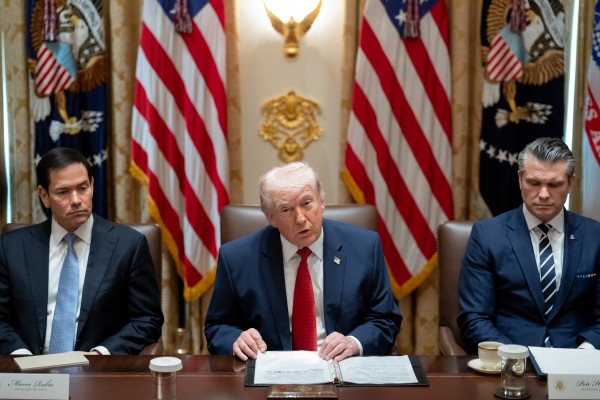
A significant exchange unfolded between US President Donald Trump and Republican Senator Bill Cassidy regarding the administration’s strategy on the Iran conflict and the broader legislative discord within the Republican Party. This confrontation occurred during a Senate Republican luncheon where Trump questioned the support for the War Powers Act resolution. Senator Cassidy, a proponent of the resolution which seeks to curtail the president’s ability to initiate military actions against Iran without congressional consent, pressed Trump for more transparency on the issue.
Senator Cassidy voiced his demand for greater clarity from the administration, emphasizing the necessity for lawmakers to receive detailed insights into the objectives and advancements of the military operations. The exchange reportedly intensified, with both parties raising their voices before the situation was eventually de-escalated. This incident draws attention to the growing friction within the Republican ranks concerning foreign policy and legislative priorities.
Compounding the tensions, President Trump has delayed signing a bipartisan housing bill that had successfully cleared Congress. He has tied the approval of this housing legislation to the passage of the Save America Act, a separate voting bill proposing stricter voter ID requirements and limitations on mail-in voting. This move has showcased the internal party struggles regarding election-related legislation and strategic priorities as the elections approach.
The internal discord has left several Republican senators expressing their exasperation following the meeting, highlighting the challenges faced by the party in aligning its legislative agenda. Meanwhile, Democrats have criticized President Trump’s decision to withhold the housing bill, which is designed to tackle rising housing costs, expedite construction processes, and enhance affordability for American families. The Democrats argue that the delay in approving this legislation hampers efforts to address critical housing issues.