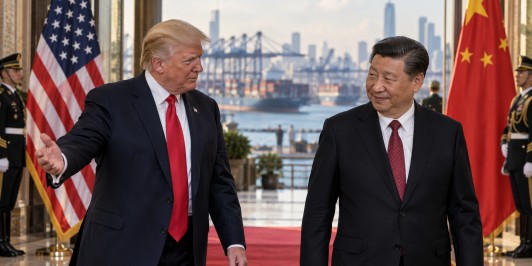
The extension of the Busan agreement between the United States and China promises to maintain a temporary trade truce between the two economic powerhouses until January 10, offering a brief respite amidst ongoing trade tensions. This development emerged as Chinese President Xi Jinping commenced his state visit to Washington, underscoring the importance of dialogue in managing complex economic and strategic issues.
President Donald Trump personally welcomed President Xi at Joint Base Andrews, a gesture highlighting the significance of the visit. The ceremonial reception, complete with military honors and a flyover by B-1 bombers, set the stage for discussions aimed at addressing trade disputes, technological competition, and geopolitical tensions.
Trade remains a pivotal point of discussion during Xi’s two-day visit, as both nations seek to navigate their differences while exploring common ground. The extension of the Busan agreement, announced by U.S. Treasury Secretary Scott Bessent, represents a crucial step in pausing certain trade-related measures, thereby stabilizing relations temporarily.
In addition to trade, the agenda includes critical dialogues on artificial intelligence and technology, sectors where the U.S. and China are vying for dominance. The leaders are expected to explore ways to manage economic competition without exacerbating tensions, an endeavor that is increasingly vital as both countries strive to secure their positions in these advanced fields.
President Xi’s visit will also feature a formal welcome at the White House and several official engagements, providing a platform for both nations to discuss methods for maintaining constructive communication. This state visit serves as a reminder of the intricate balance required to manage the world’s two largest economies amidst their ongoing rivalry in technology and trade.