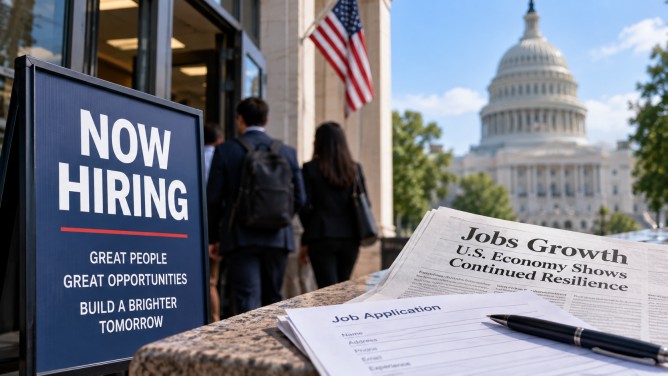
In August, the US economy experienced a notable rise in employment, adding 162,000 jobs, signaling a slight recovery from a sluggish summer in the labor market. Despite this positive trend, the unemployment rate held steady at 4.1%. The job market has seen significant fluctuations in recent months, with March witnessing an increase of 214,000 jobs, a stark contrast to July’s sharp deceleration to just 21,000. Although August’s job gains surpassed economists’ predictions, which anticipated at least 50,000 new jobs, they still reflect a cautious optimism in the market.
Revisions in earlier job estimates for June and July further illustrate the evolving labor market conditions. June’s job growth figures were adjusted to 31,000 from an initial 20,000, and July’s numbers were revised upward from a reported loss of 23,000 jobs to a gain of 21,000. Despite these upward adjustments, the labor market’s momentum remains tepid, with private-sector employment rising by only 38,000 jobs in August, indicating businesses’ restrained approach to hiring.
Economists characterize the current labor environment as a “slow hire, slow fire” climate. Companies are neither significantly expanding their workforces nor initiating large-scale layoffs. This cautious stance is reflected in the relatively stable figures for job openings and layoffs in July, as well as the flat number of workers voluntarily leaving their positions, suggesting diminished confidence among employees in securing new employment opportunities.
Additional pressures on the labor market stem from persistent inflation. From February to July, annual US inflation climbed from 2.4% to 3.4%, intensifying financial challenges for households as prices rise. Concurrently, increasing bond yields have sparked concerns regarding borrowing costs. Higher Treasury yields could lead to more expensive mortgages, car loans, and student debts, potentially exerting further strain on consumers.
The Federal Reserve faces the complex task of balancing inflation control with employment support. While raising interest rates could help align inflation with the 2% target, additional tightening risks further weakening the already decelerating labor market. Amid these challenges, President Donald Trump continues to advocate for lower interest rates, suggesting that cheaper borrowing could bolster the US economy.