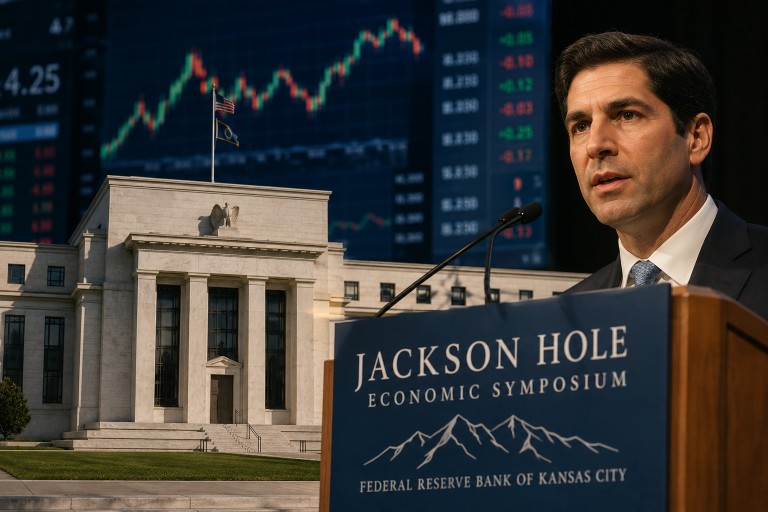
As anticipation builds around US Federal Reserve Chair Kevin Warsh’s forthcoming speech at Jackson Hole, investors are keenly awaiting insights into the future of interest rates, inflation management, and the impact of rising Treasury yields on monetary policy. Warsh has shifted away from providing explicit forward guidance, urging investors to pay closer attention to market signals. This shift has introduced a level of uncertainty regarding how the Federal Reserve plans to tackle inflation, which continues to hover above the 2% target.
The landscape is further complicated by increasing long-term Treasury yields, which some investors argue are already tightening financial conditions, potentially mitigating the necessity for additional interest rate hikes. The US Treasury’s recent decision to ramp up buybacks of long-dated bonds following a sell-off has also added complexity to the situation. While officials claim this move is intended to bolster market liquidity, investors perceive it as an attempt to alleviate pressure on long-term borrowing costs.
This backdrop has intensified the focus on Warsh’s upcoming address, as markets seek a clearer commitment on the Federal Reserve’s strategy to rein in inflation and whether further rate increases might be on the horizon. Investors are particularly interested in understanding how the Fed plans to align its actions with its inflation target and the potential for future rate hikes.
The Jackson Hole speech is set to be a pivotal moment for investors, who will be closely scrutinizing Warsh’s remarks for any indications about the future trajectory of US monetary policy. The relationship between bond market conditions and Federal Reserve decisions remains a critical area of interest, and Warsh’s guidance—or lack thereof—could significantly influence market expectations.