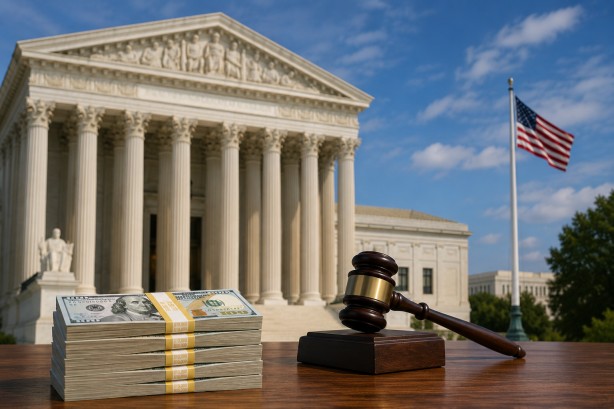
In a significant legal development, the U.S. government has been compelled to return $81 billion in tariffs to businesses following a Supreme Court ruling that deemed a major portion of former President Donald Trump’s tariff policies as unlawfully imposed. This substantial refund has been processed within the current fiscal year, marking a notable increase from the $5 billion refunded during the same timeframe last year. The Supreme Court’s decision necessitated the reimbursement of companies that had paid these import duties under the annulled tariffs.
Most of the tariff refunds were distributed in the months of May and June, according to financial data from the Treasury. This large-scale repayment has exacerbated the federal budget deficit, which ballooned to $1.367 trillion in the initial nine months of the fiscal year. Contributing to this fiscal strain are rising interest payments on the national debt and an increase in military spending, both of which have added pressure to the government’s financial obligations.
Despite the court’s ruling, the Trump administration is forging ahead with plans to introduce a new series of tariffs. These proposed measures aim to address international trade practices, industrial overcapacity, and the enforcement of anti-forced labor laws. The anticipated tariff rates are projected to fall between 10% and 12.5%, with additional duties being considered for various major trading partners.
The implementation of these tariffs has the potential to affect a range of economic sectors and international relations. Businesses and policymakers alike will be closely watching the administration’s next steps as they navigate the complexities of global trade and domestic economic impacts. As these developments unfold, the balance between enforcing trade laws and managing economic repercussions continues to pose a significant challenge for the government.