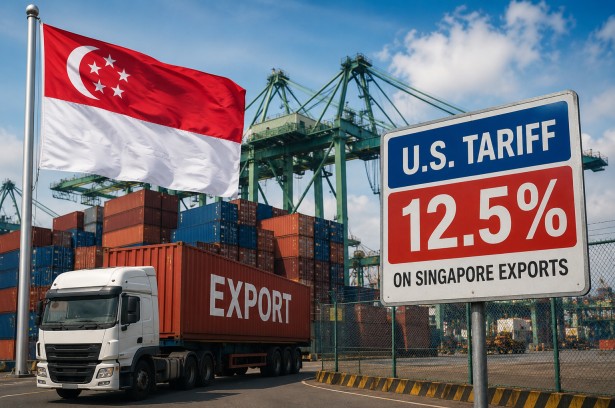
The United States has announced the imposition of a 12.5% tariff on roughly one-third of Singapore’s domestic exports, citing concerns over enforcement of forced labour laws. This move is part of a broader trade strategy impacting numerous global economies. In response, Singapore promptly rejected these allegations, asserting that the nation has a robust legal framework to combat forced labour and does not condone such practices. The Ministry of Trade and Industry has expressed its intention to maintain dialogue with U.S. trade officials to seek clarity on the implementation of the new tariff.
While this tariff affects a significant portion of Singapore’s exports, several key sectors have been exempted from this measure. Notably, exports such as pharmaceuticals, semiconductors, certain electronics, aerospace products, and energy products, along with goods already under specific U.S. tariffs, are not subject to the new tariff. This exemption provides some relief to industries that are critical to Singapore’s economy.
Business groups in Singapore have expressed concern that the new tariff may increase uncertainty for manufacturers and exporters. They pointed out that this development could add pressure, especially as the U.S. is conducting a separate investigation that might lead to further trade sanctions. Amidst this uncertainty, industry leaders are advising companies to explore diversifying their export markets and to enhance the resilience of their supply chains to mitigate potential disruptions.
The imposition of the tariff highlights ongoing trade tensions and the complexities of international trade policies. Both nations are expected to continue negotiations, aiming to address the concerns raised and to find a resolution that minimizes the impact on bilateral trade relations. As discussions progress, stakeholders in Singapore are closely monitoring the situation, hoping for a swift and favorable outcome that supports continued economic collaboration between the two countries.