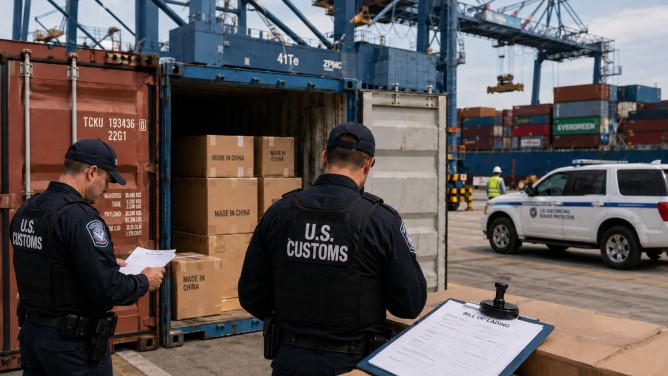
The United States has leveled accusations against 38 countries and the European Union, claiming they are part of a “shadow transshipment network.” This network is purportedly enabling Chinese goods, subject to hefty U.S. tariffs, to infiltrate the American market via third-party nations. A recent report titled “The Great Transshipment Scam” highlights this issue, estimating that the magnitude of potentially illegal transshipment activities could reach a value of approximately $60 billion, resulting in substantial losses in U.S. tariff revenues.
The list of countries and territories implicated in the report is extensive, including nations such as India, Canada, Israel, Japan, Mexico, South Korea, Taiwan, Brazil, Indonesia, Malaysia, and Thailand. Additionally, countries like Turkey, Vietnam, Argentina, Azerbaijan, Bangladesh, Cambodia, Chile, Colombia, Costa Rica, the Dominican Republic, Georgia, Jordan, Kazakhstan, Kenya, Laos, Morocco, Myanmar, Oman, Panama, Peru, the Philippines, Singapore, Sri Lanka, Switzerland, the UAE, and Uzbekistan are also named. According to the report, in 2025, an estimated $67 billion worth of goods bound for the U.S. were allegedly rerouted through major transit hubs including Mexico, India, and Vietnam, resulting in an estimated $28 billion loss in U.S. tariff revenue.
The report further draws attention to the Pune-Gujarat-Chennai corridor in India, noting that Chinese shipments of products like electric pumps and compressors have significantly benefited businesses located along this corridor. This, in turn, has heightened competitive pressures on U.S. manufacturers struggling to maintain their market share against these transshipped goods.
In response to these findings, the U.S. is considering a suite of measures aimed at curbing this alleged tariff evasion. Proposed actions include stricter inspections and interdiction efforts, the imposition of additional tariffs, and the application of sanctions. Furthermore, there is potential for the U.S. to restrict market access for countries that are found to be facilitating these transshipment activities, as part of a broader strategy to protect American economic interests.