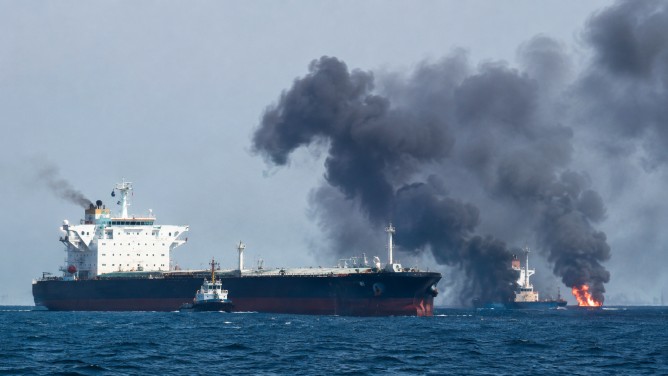
The Islamic Revolutionary Guard Corps (IRGC) of Iran reported an incident involving two oil tankers that were allegedly attempting to pass through the Strait of Hormuz with a U.S. military escort. According to the IRGC, these vessels were targeted because they were not adhering to its designated shipping routes. Following this confrontation, four additional tankers reportedly reversed course. The Strait of Hormuz, a critical passageway for global energy shipments, has become increasingly unstable due to escalating hostilities between Iran and the United States, leading to significant disruptions and a surge in crude oil prices beyond $90 per barrel.
Regional military tensions have continued to intensify. In Kuwait, authorities intercepted Iranian drones aimed at critical military and strategic installations. Fortunately, no casualties were reported in this incident. Meanwhile, in Lebanon, Israel executed a substantial military operation near Beaufort Castle, claiming it was aimed at Hezbollah targets. This action has drawn criticism from Lebanese officials, who have accused Israel of violating the existing ceasefire agreement.
In response to the ongoing conflict, President Donald Trump held a cabinet meeting at Camp David, focusing on the conflict’s economic ramifications. The administration faces mounting pressure as fuel and consumer prices rise, exacerbating economic concerns. Recent opinion polls have indicated a decline in public support for the U.S. involvement in the conflict, adding to the administration’s challenges as it navigates the complex geopolitical landscape.
The persistent instability in the region has translated into increased financial gains for major energy corporations, which are benefiting from the surge in oil prices. This trend is impacting global markets, highlighting the far-reaching effects of the conflict beyond the immediate geopolitical tensions.