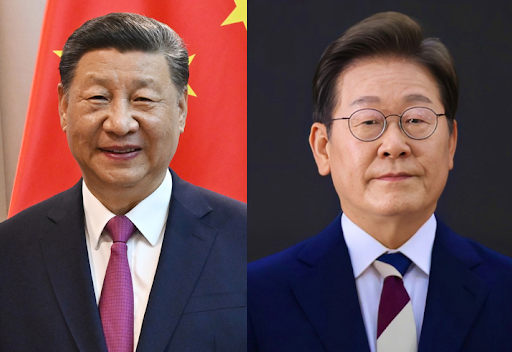
The ghost of the 2017 THAAD missile dispute haunted the summit between Chinese President Xi Jinping and South Korean President Lee Jae Myung, serving as a powerful reminder of the unresolved tensions that define Seoul’s foreign policy. The issue, a direct result of the U.S. alliance, complicates Seoul’s relationship with its largest trading partner.
President Lee was compelled to raise the sensitive topic during his talks with Xi, acknowledging the deep rift it has caused. The U.S.-deployed THAAD system is seen as essential for Seoul’s defense against North Korea, but as a direct threat by Beijing. This single issue perfectly encapsulates the tightrope Lee must walk.
This diplomatic challenge was amplified by pressures at home. As Lee and Xi met, hundreds of protesters rallied in Seoul, voicing their anger not just about THAAD, but about China’s growing influence in general. This domestic dissent adds another layer of complexity to Lee’s foreign policy calculations.
Lee’s agenda was further complicated by North Korea’s intractable hostility. A key goal for the summit was to enlist Xi’s help in restarting dialogue with Pyongyang. This effort was met with immediate and public scorn from North Korea, which dismissed the initiative as a “pipe dream.”
While Lee juggled the THAAD dispute, protests, and Pyongyang’s rejection, Chinese state media offered a simpler, more positive spin. It focused entirely on the seven new economic agreements signed, including a currency swap. Xi’s call for “mutual respect” was a clear message: China is willing to do business, but the political and security issues remain Seoul’s problem to solve.