As the sun reaches its lowest point in the sky, all eyes in Cornwall turn toward Land’s End. This peninsula is uniquely positioned to mark the winter solstice, acting as a natural arrow pointing toward the sunset. From the high moors of Morvah to the coastal stones of Boscawen-Ros, the landscape is dotted with ancient sites that have honored this celestial event for four millennia.
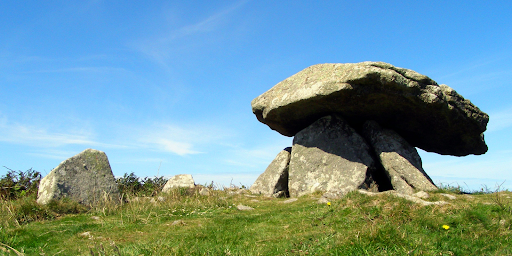
The archaeoastronomy of the region suggests a highly sophisticated understanding of the heavens. Carolyn Kennett notes that the “spine of granite” running through the peninsula creates a natural corridor for the midwinter sun. Standing at Chûn Quoit, the sun sets directly over the “sinister” rock of Carn Kenidjack, a sight that was almost certainly planned by Neolithic architects.
The mysterious holed stones of Kenidjack offer a more intimate connection to the sun. Too small to crawl through, these holes were likely designed to let the “golden beam” of the rising sun pass through, warming the cold moor and providing a “visceral experience” of the solstice. It was a way for ancient people to feel the sun’s presence even in the depths of winter.
Modern celebrations of the solstice in West Cornwall are a mix of quiet pilgrimage and loud festivities. Many locals continue the tradition of walking to ancient beacons or holy wells to reflect on the year past. Others join the crowds in Penzance for Montol, where the streets come alive with the sounds of traditional carols and the sight of flaming torches.
Montol is a festival of “mischief and taboo-breaking,” reviving the Cornish tradition of disguise. With papier-mâché suns and ‘obby ‘osses, the festival turns the longest night into a riot of color and fire. It is a fittingly “uproarious” way to welcome the increasing hours of light, proving that the magic of West Penwith is as strong today as it was 4,000 years ago.